

Index
1. Sharing the Wonder of Science with Children
We want children to discover the wonder of science. This belief is what ultimately brought together the worlds of astronomy and Pokémon.
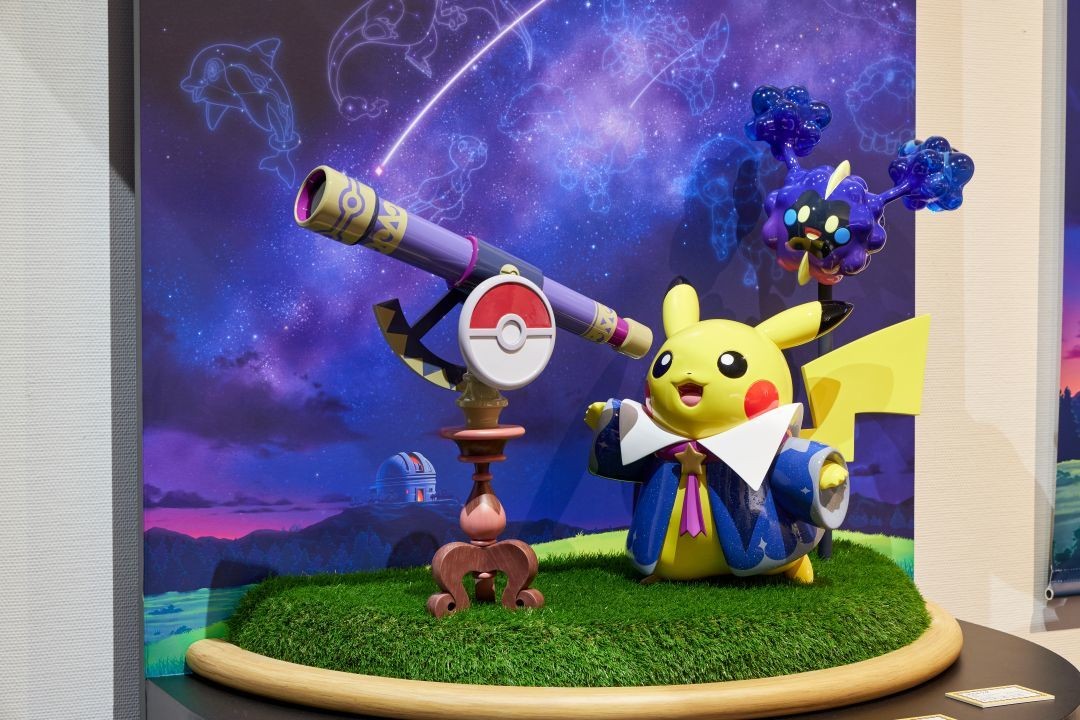
Starting at the Sagamihara City Museum, the "Pokémon Observatory" is a special traveling exhibition now touring Japan. By teaming up with the National Astronomical Observatory of Japan (NAOJ), we are introducing the mysteries of the universe by drawing parallels with the ecology of Pokémon.
This project began three years ago, when the idea of creating a science exhibition featuring Pokémon was brought up.
Since then, the Pokémon Fossil Museum has been held as part of the "My First Pokémon Project", an initiative by The Pokémon Company designed to create opportunities for children to engage with Pokémon. Next, we turned our sights to conveying the wonder of science to children through a special exhibition focused on space. A member of that project who had majored in life sciences proposed the concept:
"Some theories suggest that life originated in space, indicating a strong connection between the cosmos and life itself. Given that children’s interest in science is declining, I felt that introducing Pokémon could serve as a gateway for children to become interested in the subject."
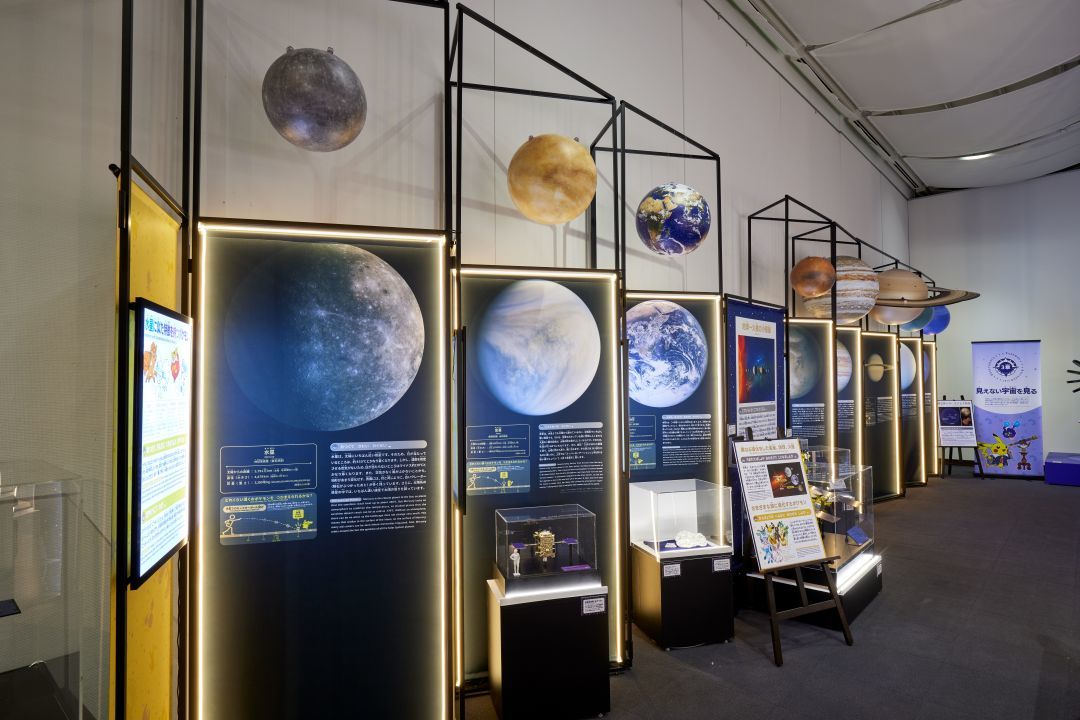
Although it was originally planned to be held at a single museum, the team wanted to give as many children as possible the chance to experience it. This led to the decision to explore the traveling exhibition format. Through the connection to the National Museum of Nature and Science from the "Pokémon Fossil Museum," we secured a collaboration with the NAOJ, the institution at the cutting edge of astronomy in Japan.
2. Making Diversity and the Pursuit of Knowledge the Key Focus
The opening of "Pokémon Observatory" was preceded by approximately a year and a half of experimentation and refinement. The greatest challenge was determining how to meaningfully link Pokémon with space.
Initial ideas included having a professor from the Pokémon series explain concepts or creating a narrative similar to the games. However, there was concern that these approaches would limit the experience to the virtual world, even while trying to discuss the real-world cosmos.
How could we convey the study of space in the real world? And how could we put together an exhibition that communicates the wonder of real-world astronomy while expressing the world of Pokémon? After extensive discussion, the team arrived at two key phrases to connect the concepts: Diversity and the Pursuit of Knowledge.
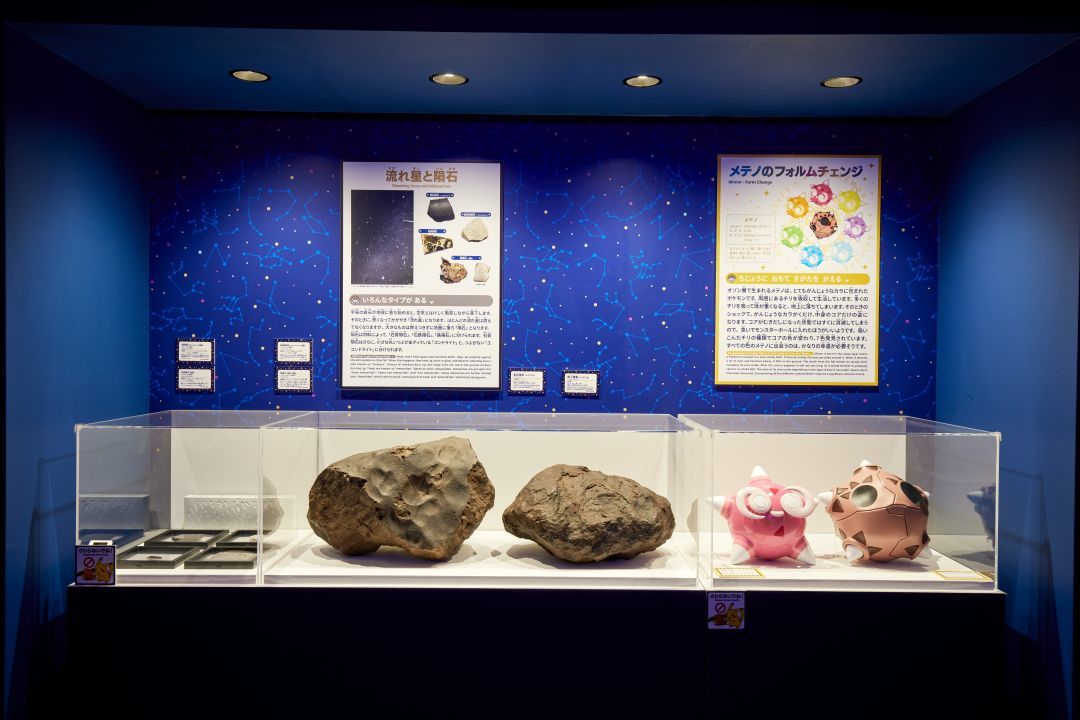
"The universe contains a vast diversity of environments that go far beyond our common sense. Similarly, over 1000 Pokémon have been discovered so far, each with its own unique ecology. We realized that diversity is a trait shared by both Pokémon and the cosmos."
The second shared theme is the pursuit of knowledge. The desire to understand the unknown drives us to gaze at the sky and wonder about the mysteries of the universe, just as it drives us to search for Pokémon we have yet to encounter. With these two commonalities at the core, the exhibition concept was set: Explore the mysteries of the universe through the lens of Pokémon ecology.
3. Commonalities Between Space and Pokémon, Discovered with Experts
Researchers from NAOJ and members of the Pokémon team deepened their discussions about exhibit content.
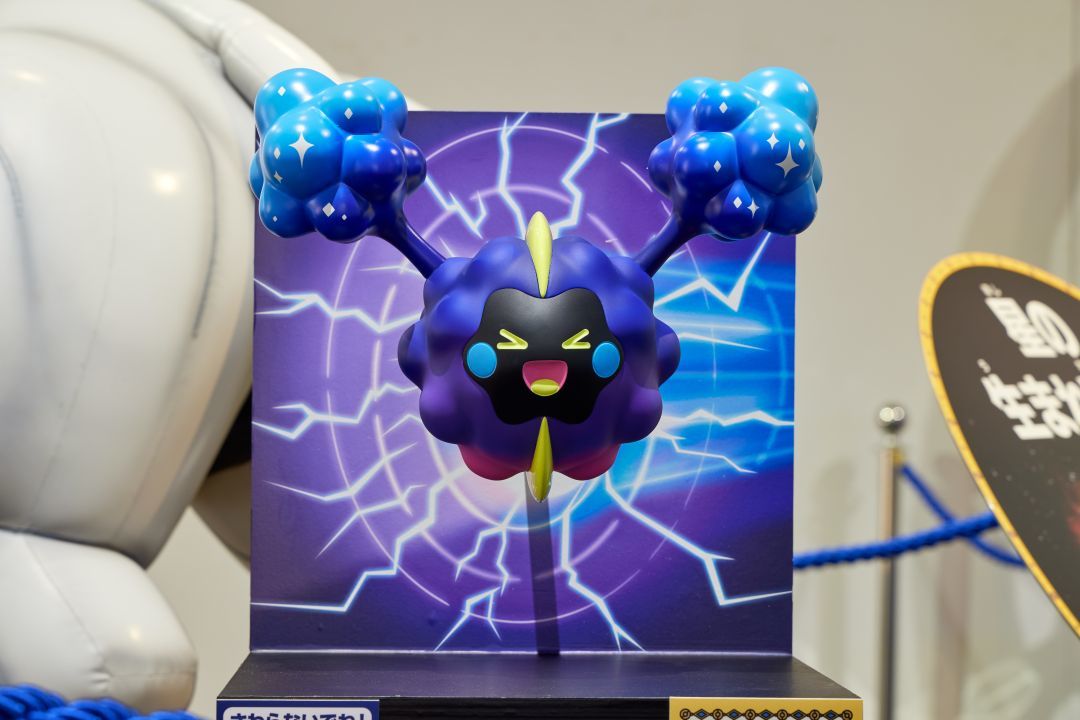
One of the resulting exhibits focuses on the life cycle of stars. In astronomy, the process of gas gathering, forming stars, and transforming is known as "stellar evolution." This concept closely mirrors Pokémon evolution in that they both involve a single entity changing its form.
To explain this concept of stellar evolution, the Nebula Pokémon, Cosmog, was called into action. Its transformation from a gaseous body into the hard, shell-encased Cosmoem, and finally into either the radiant Solgaleo or light-absorbing Lunala, closely resembles the lifecycle of a star.
Another unexpected connection between astronomy and Pokémon appears in the exhibit that pairs Jupiter with the Pokémon Dusclops. Jupiter is characterized not only by its stripes and Great Red Spot, but also by being a planet composed of gas.
"At first, we struggled to find a Pokémon that matched Jupiter's characteristics, so we combed through the Pokédex. Finally, we arrived at the Ghost-type Pokémon, Dusclops. It has a red eye, its body is striped with bandages, and on top of that, it's hollow inside. When we realized the match, we excitedly exclaimed, 'This is the one!'"
When displayed alongside Dusclops, Jupiter's characteristic stripes and Great Red Spot become even more striking. This is how details that might otherwise be overlooked when simply reading the exhibit description become easier to remember when compared to Pokémon ecology, and is exactly the kind of exhibit we wanted to create.
4. Our Desire for Children to Learn About Real-World Science Through the Virtual World
Inside the museum, children can be seen reading the exhibits explanations with intence focus while holding the quiz sheet handed out to visitors.
We asked ourselves: rather than passively viewing the exhibits, how could we encourage active learning? To solve this, we handed out quiz sheets to everyone who entered. We also prepared a special "Certificate of Appointment as Special Researcher" to recognize visitors as Pokémon Observatory Researchers if they can answer all of the questions correctly.
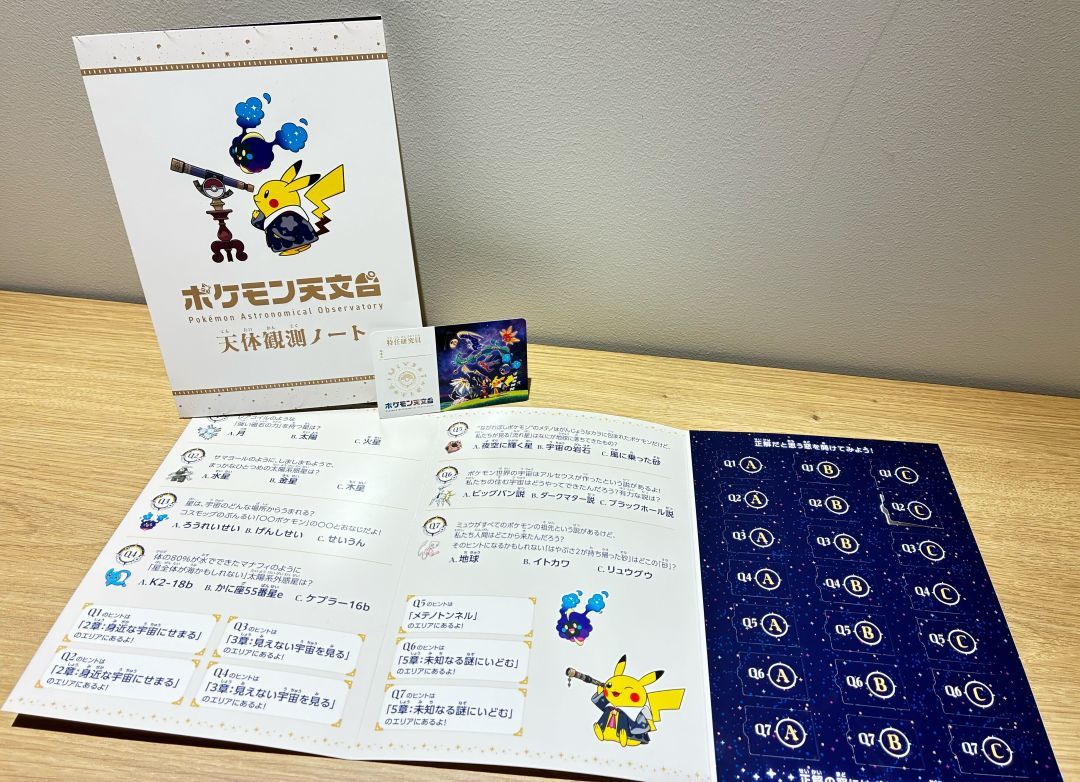
This structure motivated visitors to read and understand the complex explanations. Several guardians commented that the quizzes helped their children become deeply engaged, noting that it was the first time that they had seen them reading exhibit explanations so carefully.
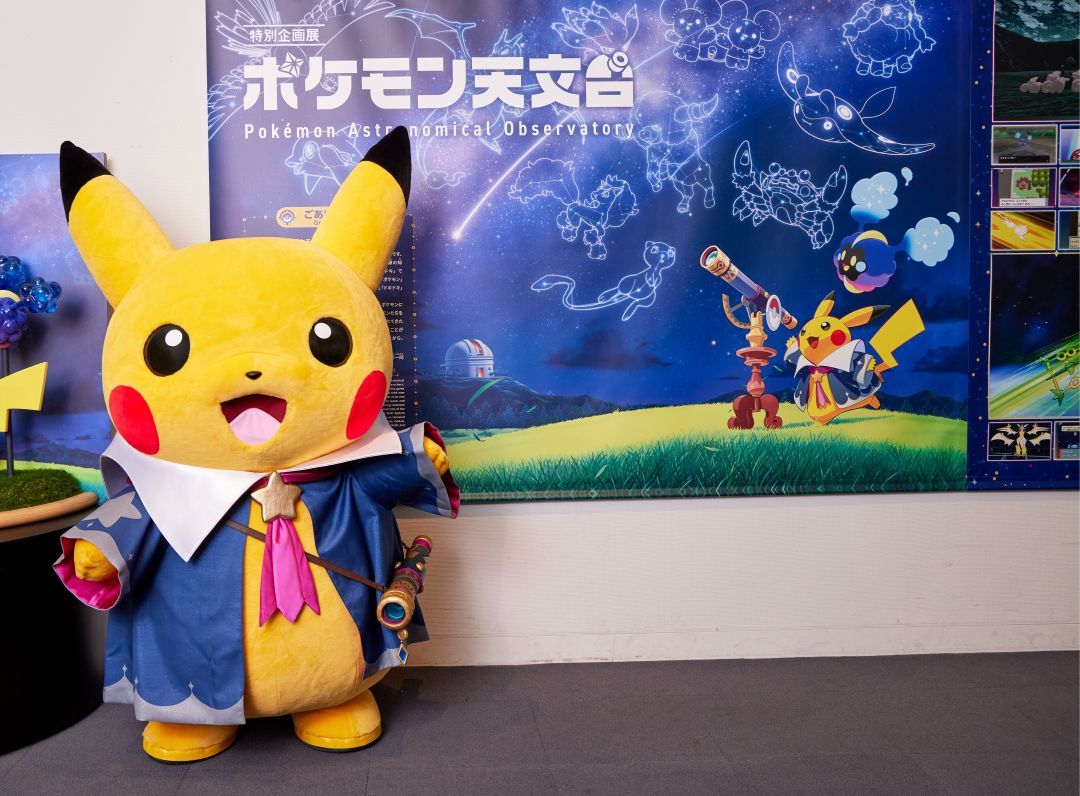
The experience resonated not only with children but also with adult fans who grew up playing Pokémon, who commented that they enjoyed the detailed Pokémon lore used in the exhibits.
We remain committed to creating spaces that nurture children’s curiosity and help turn the fun of fantasy into a genuine interest in the world around us.